
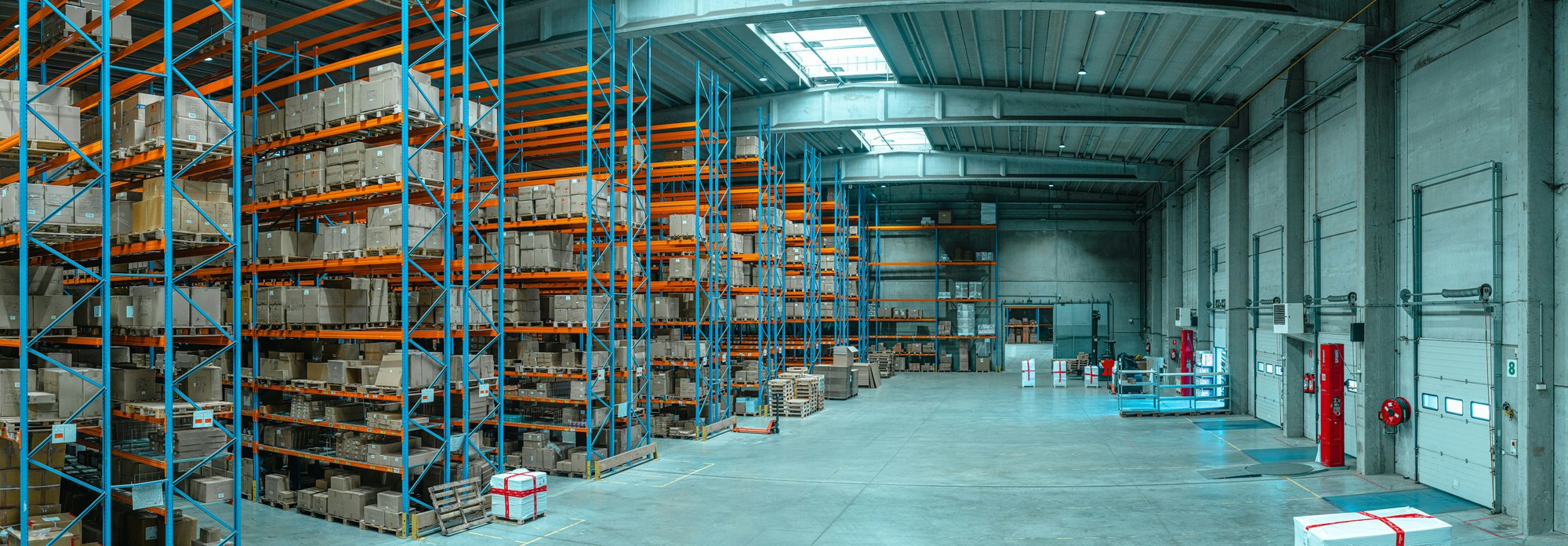
Reliability in logistics rarely comes from promises. It comes from control: control over space, equipment, labor, and transportation capacity when conditions change fast. That is where asset-based strength matters most. An asset-based third-party logistics manager (3PL) owns and operates the infrastructure that moves your freight and manages your inventory, rather than stitching everything together through third parties.
When your operation supports retail compliance, B2B replenishment, or high-velocity eCommerce, small execution gaps quickly become large financial problems. The right logistics model reduces those gaps through steadier capacity, clearer accountability, and more consistent process discipline, especially when volatility hits.
Asset Ownership Changes the Service Equation
Asset-based providers operate warehouses, material handling equipment, and often transportation resources that they directly manage. That ownership structure tightens accountability because fewer handoffs exist between your order file and your customer’s receiving dock.

What that looks like in practice:
- Defined operating standards for receiving, putaway, slotting, and picking
- Equipment availability you can plan around, such as forklifts, clamp trucks, or specialized attachments
- Fewer “not my problem” moments because one operator controls more steps end-to-end
- Faster decisions when you need to flex labor, staging lanes, or trailer pools
Business impact: fewer delays and fewer exceptions translate into improved service levels, lower expediting spend, and fewer customer escalations.
Capacity Planning and Disruption Recovery Get Easier
Non-asset models can work well for certain lanes or one-off needs, but they often rely on market capacity at the exact moment you need help. Asset-based operations reduce that exposure because your provider plans around owned infrastructure and staffed teams, not only spot availability.
Key resilience advantages:
- More predictable surge response during promotions, seasonality, or port-driven inbound waves
- Quicker recovery after weather disruptions or carrier rejections because the operator can re-slot, re-stage, and re-sequence work inside the same network
- Stronger driver and safety alignment when employee teams run equipment under consistent training programs, which industry reporting links to better retention dynamics at private fleets versus many for-hire environments.
Business impact: better continuity protects revenue and reduces the hidden drain from rework, missed appointments, and premium transportation.
How Asset-Based Strength Improves Consistency and Visibility
Systems matter, but systems only help when disciplined processes feed them clean data. Asset-based operations tend to pair technology with daily execution control, which improves inventory records and order status accuracy over time.
Where consistency shows up:
- Inventory accuracy management through cycle counting and variance investigation, using standard metrics that leadership can audit.
- Connected customer visibility via portals and EDI that reduces manual touches and speeds exception resolution
- Automation and AI enablement for slotting logic, labor planning, scan verification, and exception flagging, which helps supervisors focus on the few problems that truly threaten service
Even small error rates compound. Guidance on warehouse quality emphasizes how a seemingly minor picking error rate can quietly erode margin through additional labor, reshipments, and customer dissatisfaction.

Business impact: improved data integrity strengthens planning, reduces oversells and backorders, and supports steadier customer experiences without constant firefighting.
Rail-Linked Networks and Megalopolis Proximity Reduce Risk
Owned infrastructure matters even more when your freight flows through dense corridors and port-heavy regions. In the Northeast Megalopolis, tens of millions of consumers live along a tight economic spine, and that concentration raises expectations for speed, accuracy, and compliance.
Rail-linked strategies also provide meaningful efficiency advantages when the lane fits. Industry sources commonly cite rail’s fuel efficiency at roughly one ton of freight moved nearly 500 miles per gallon, on average, which helps explain why many shippers use rail or intermodal options to stabilize long-haul economics.
Why this matters to leadership teams:
- Lower exposure to road-only bottlenecks when rail and truck options complement each other
- Improved planning windows through scheduled linehaul with predictable cutoffs
- Better corridor coverage when facilities sit within practical reach of major gateways and dense customer zones
Business impact: the right location plus modal flexibility reduces variability, supporting steadier OTIF performance and fewer premium freight decisions.
Build More Certainty With Lansdale Warehouse
If you want a logistics partner that converts infrastructure control into day-to-day reliability, Lansdale Warehouse offers an asset-based model designed for accountable execution. Lansdale operates as a family and veteran-owned provider founded in 1958, with owned facilities, equipment, and a truck fleet that support consistent service under a Customer Driven Logistics approach.
For shippers that require quality and compliance, Lansdale brings ISO9001 certification and FDA and AIB certified locations, along with online access to inventory and orders and EDI connectivity. Lansdale also supports operational programs that often define modern supply chains, including pick-pack fulfillment, compliance labeling, cross-dock, rail service, and transloading, plus just-in-time support for tighter production and replenishment schedules.
If you are evaluating how an asset-based 3PL could reduce volatility and strengthen performance across your network, reach out to us to discuss what a reliable, infrastructure-driven program could look like for your business.
Comments are closed