

A warehouse technology budget built on wrong depreciation figures costs money twice. First, when the asset fails before the budget expected it to. Then, when the replacement arrives without an approved capital allocation. Estimating the useful life of assets correctly is a planning tool, not an accounting formality. It sets when to replace equipment and how to budget for technology refresh cycles.
The IRS Modified Accelerated Cost Recovery System, or MACRS, classifies most warehouse equipment as 5-year or 7-year property for tax purposes. According to IRS Publication 946, general-purpose industrial machinery typically falls into the 7-year class. Computers and peripherals fall into the 5-year class. These figures govern the tax treatment of an asset. They don't necessarily match the useful life of assets in a real warehouse setting.
Why Tax Life and Working Life Diverge
The tax recovery period indicates how long the IRS allows you to depreciate an asset. The working life tells you how long the asset actually performs well enough to use. For most warehouse technology, these two numbers don't align. A barcode scanner may reach the end of its 5-year tax life while still working. An RF handset running outdated firmware may fail to connect with a new WMS long before its tax life ends.

In conclusion, equipment replacement decisions can't rely on tax schedules alone. Instead, they need to account for actual performance loss, integration fit, and the cost of continued upkeep against replacement.
How to Estimate the Useful Life of Assets
Accurately estimating the useful life of assets requires three inputs:
- First, the physical condition profile: how does the equipment hold up under daily use? Barcode scanners, RF guns, and handheld terminals all face drops, dust, and continuous trigger use. Industrial-grade equipment outlasts consumer-grade hardware by a wide margin in that setting.
- Second, the integration horizon: how long will the asset stay compatible with the surrounding technology stack? A scanner that can't connect to a new WMS or EDI system becomes a problem before it wears out. For real-time inventory visibility systems to work, every device needs to stay current with the data standards the system runs on.
- Third, the upkeep cost curve: at what point does maintaining the asset cost more than replacing it? For most warehouse technology, that curve steepens around year four or five. Batteries degrade, scan windows scratch, and firmware support ends. So a maintenance log that tracks repair frequency and cost gives operations managers the data to make that call on evidence, not guesswork.
Depreciation Methods and Their Practical Effect
Meanwhile, straight-line depreciation spreads the cost of an asset evenly across its useful life. If a scanner costs $1,200 and carries a 5-year useful life, the annual charge is $240. That method works for budget planning when the asset performs consistently.
Accelerated depreciation, including MACRS, front-loads the cost recovery. That approach matches the reality of most warehouse technology better. Equipment loses the most value in its early years. A scanner worth $1,200 at purchase is worth far less at year three, regardless of the tax schedule. For asset-based 3PLs that own their equipment outright, understanding this curve helps justify replacement timing to finance teams without waiting for a tax schedule to catch up.
Useful Life of Assets by Equipment Category
Different categories of warehouse technology carry different life expectations. Handheld barcode scanners and RF guns typically run three to five years in heavy use before upkeep costs justify replacement. Fixed-mount scanners and conveyor-integrated readers often last five to eight years in stable settings with regular cleaning and firmware updates.
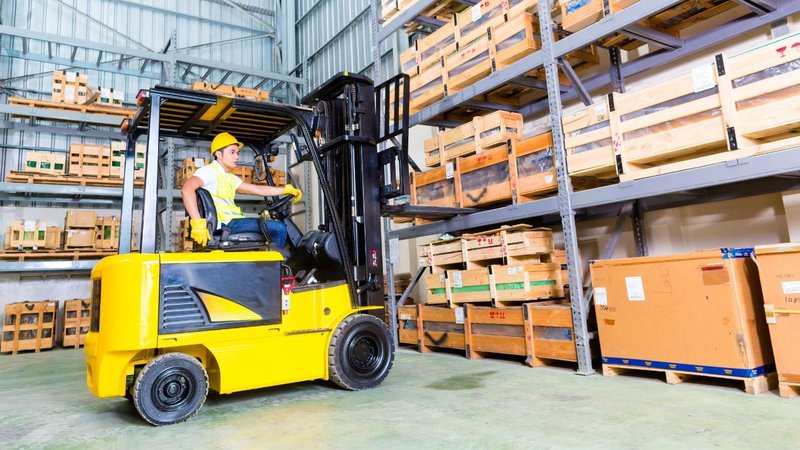
Forklifts and pallet movers carry longer estimates, typically seven to ten years, with scheduled upkeep. Racking systems, when properly checked and maintained, can last fifteen years or more. For specialized material handling equipment used in paper, lumber, or pharma categories, the useful life of assets depends on use intensity and the quality of the upkeep program.
Building the Replacement Schedule
A capital replacement schedule maps each asset category against its expected replacement date and cost. That schedule prevents the budget surprise of a scanner fleet all failing in the same fiscal year. It also spreads capital spending across years rather than landing a large replacement cost in a single cycle.
For operations managers working with a 3PL partner, the useful life of assets the partner owns matters as much as the brand's own equipment. A partner running aging assets on deferred upkeep introduces risk that the brand absorbs through service failures. For better understanding, the FASB Accounting Standards Codification 360 governs how companies account for long-lived assets. It requires reviews of useful life estimates when circumstances change. For operations teams supporting financial reporting, aligning the replacement schedule with the accounting treatment avoids gaps at audit.
Equipment that outlives its planned useful life becomes a risk, not a saving. If your operation depends on technology running past its replacement window, the cost shows up in error rates and upkeep invoices. Contact us to learn how we manage equipment replacement proactively across our full asset base.
Comments are closed