
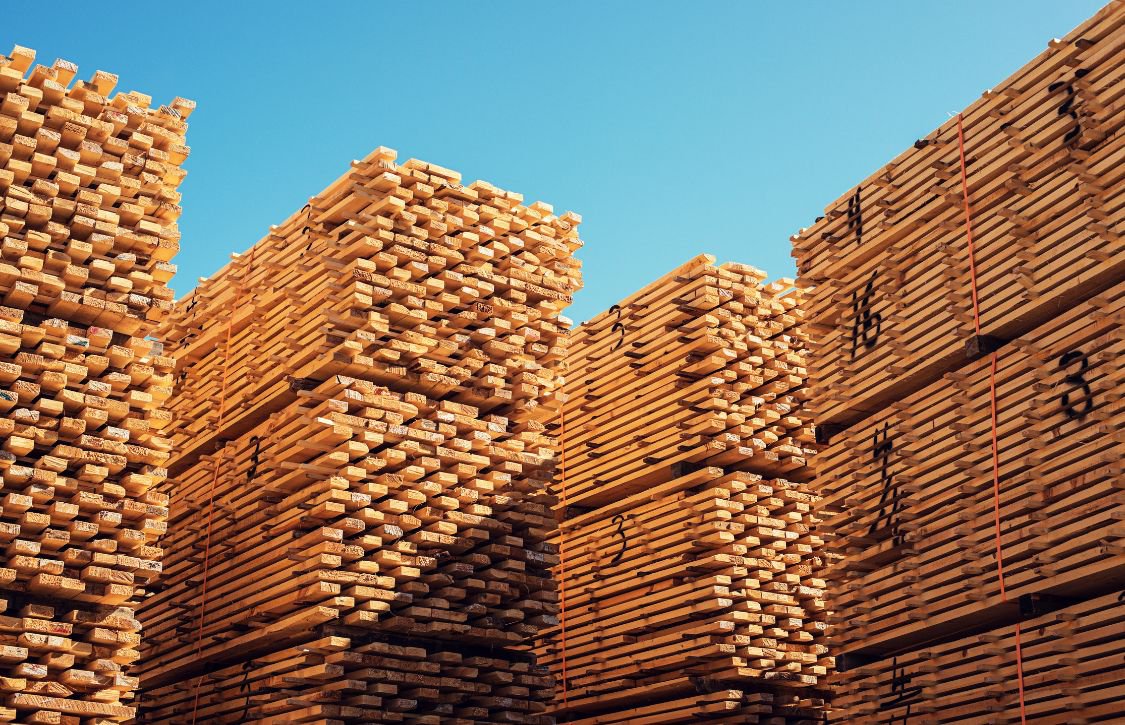
Lumber doesn't travel the way finished goods do. It arrives in bulk, requires heavy equipment to handle, and doesn't fit standard pallet configurations. It often needs to reach a job site on a tight construction timeline rather than a retail store with flexible receiving hours.
The supply chain built for lumber distribution reflects those realities. It looks very different from a warehouse configured for boxed consumer goods.
Lumber Distribution Starts at the Rail Siding
The economics of lumber distribution favor rail for long-haul movement. The Association of American Railroads (AAR) confirms that freight rail moves one ton of freight nearly 500 miles on a single gallon of fuel, making it three to four times more fuel efficient than truck for comparable long-haul loads. For bulk commodities like dimensional lumber, that efficiency translates directly into lower per-unit freight cost at volume.
Lansdale Warehouse operates two CSX-served, rail-siding facilities in Montgomery County, PA. When lumber arrives by rail, transloading operations move it directly from the railcar to the appropriate storage configuration: rack storage for organized dimensional inventory, floor-loaded staging for job-site delivery sequences, or short-line transfer for last-mile positioning.

That entire sequence happens within the same facility network, without intermediate trucking that adds cost and handling risk. The intermodal efficiency of combining Class I rail access with owned short-line service for daily last-mile delivery makes a rail-served 3PL operationally different from a facility that receives only by truck.
Handling Equipment Built for Heavy Freight
Lumber isn't a product that generic material handling equipment manages well. The dimensional variability, weight per unit, and bundling formats suppliers use all require equipment for heavy, irregular freight rather than the standard forklifts and conveyors that handle boxed goods.
Specialized rail and truck support for the lumber industry at Lansdale includes carton clamp equipment, roll handling infrastructure, and heavy storage rack configurations that accommodate a wide range of dimensional formats. The handling sequence runs from inbound railcar through storage to outbound truck loading. At each stage, it follows lumber's physical characteristics rather than a generic warehousing framework.
In addition, rail-to-truck transloading allows lumber to arrive in bulk railcar quantities and redistribute into truck-sized loads matched to job-site delivery requirements. That split gives procurement teams the cost advantage of bulk rail pricing with the last-mile flexibility of regional trucking.
Geographic Position and Last-Mile Reach
Rail freight rates have declined 44% in inflation-adjusted terms since 1981, according to the AAR. That reflects decades of productivity gains that make rail the most cost-effective option for bulk freight over long distances. However, the cost advantage is most accessible when the receiving facility has direct rail service. If freight requires trucking from a regional intermodal terminal to the warehouse, the savings erode.
Lansdale's position in Montgomery County, PA puts lumber distribution within reach of major construction markets in the Northeast corridor. Daily truck routes cover Delaware, Eastern Pennsylvania, Maryland, New Jersey, Southeast New York, and Southern Connecticut. That reach matters for distributors serving contractors with variable delivery schedules.
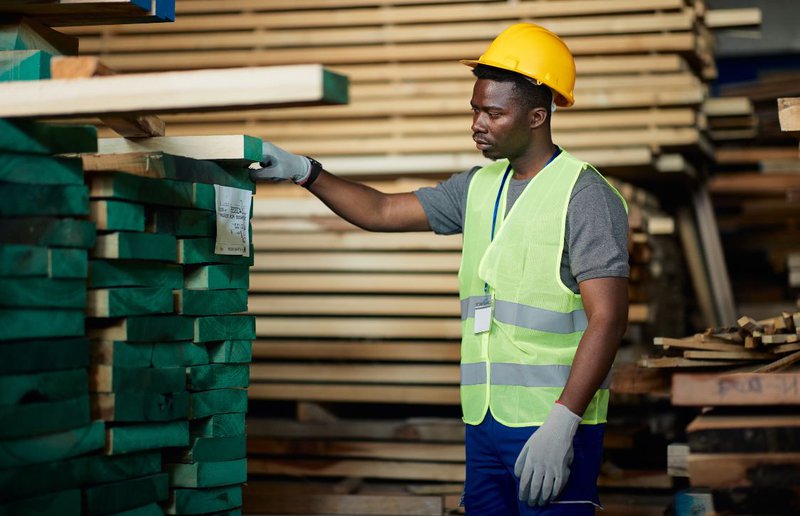
A job site in Central Jersey and a distribution center in suburban Philadelphia might both need deliveries in the same week. Often, those timelines aren't confirmed when the original order goes in. Rail-served warehousing that feeds a regional truck network gives distributors the flexibility to fulfill both without secondary handling penalties.
The Full Lumber Distribution Chain
Optimizing lumber distribution means treating the supply chain as a connected sequence, not a series of separate handoffs. Rail arrival, transloading, storage, and last-mile delivery should operate as an integrated system. That means visibility at each stage and the ability to reprioritize as job-site demand shifts.
Lansdale Warehouse's asset-based model makes that integration possible without relying on third-party providers at each handoff. When the same organization owns the rail siding, the storage facility, and the delivery truck, coordination doesn't require inter-company scheduling. It's a single operational decision.
For lumber distributors evaluating a logistics partner, that integration is the standard worth looking for. Contact us today. Let’s go over what a rail-to-job-site lumber distribution program looks like from a Montgomery County hub.
Comments are closed