

Understanding the mis-shipment meaning inside your operation starts with seeing every wrong order as usable quality data. A wrong item, short quantity, or misrouted pallet reveals exactly where one of your controls failed to act. When you treat those events as signals, you can redesign checks before the same mistake reaches another customer.
Many shippers fix the single order, issue a credit, and move on without asking what the pattern means. Over time, repeated errors erode retailer scorecards, raise freight costs, and strain relationships you worked hard to build. The steps below show how to log, analyze, and convert mis-shipment events into stronger quality control logic.
Understanding the Mis-Shipment Meaning in Your Data
Every error record you capture holds clues about people, processes, systems, and partners across your fulfillment chain. Without a shared definition, however, your team may log the same problem five different ways and miss trends. A clear framework gives everyone one language for describing, sorting, and escalating shipping errors across every shift.
Start with an event log capturing order number, customer, stock keeping unit (SKU), error type, and discovery point. Then group events into categories such as wrong item, wrong quantity, wrong address, and labeling or paperwork faults.
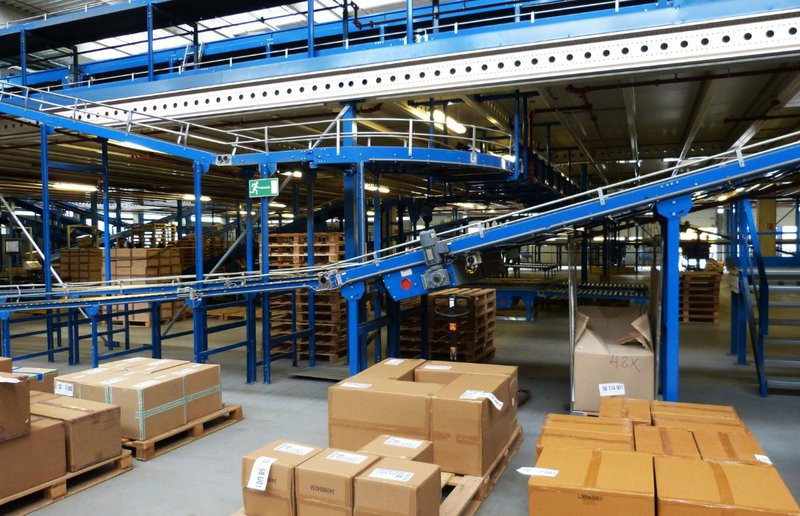
Data capture matters just as much as categories, since scan records show who handled each order and when. Electronic data interchange (EDI) and advance ship notice (ASN) mismatches also expose errors that never touch the warehouse floor. For tips on keeping partner feeds accurate, review our guide to EDI troubleshooting practices and clean data flow.
When you combine scan data with transaction records, the mis-shipment meaning in your data becomes much clearer. You can then separate human mistakes from system faults, carrier issues, and upstream supplier problems. Clean separation keeps your team from blaming pickers for errors that actually began in an order file.
What Is the Mis-Shipment Meaning, and How Do Events Feed Quality Control?
A mis-shipment means any order that leaves your facility with the wrong item, quantity, destination, label, or documentation. Each event becomes a data point that shows where your verification steps failed to catch the problem. Once you log and categorize these events, they guide which quality control rules you strengthen, add, or retire.
Turn Root-Cause Findings Into Quality Control Rules
Root-cause coding turns raw events into patterns you can act on with targeted process and system changes. Assign each mis-shipment a primary cause code, such as slotting error, scan bypass, label mix-up, or data mismatch. Once you apply the mis-shipment meaning to each code, the right quality control rule usually becomes obvious.
First, verification checkpoints add a second scan or visual check at packing for high-risk SKUs and new customers. Scan-to-ship validation then blocks any carton from leaving until its barcode matches the order, carrier, and destination.
Weight checks also compare actual carton weight against expected weight and flag packages outside your set tolerance. Finally, exception holds stop questionable orders automatically, so a supervisor reviews them before the truck departs. Labeling rules deserve special attention, because retailer chargebacks often stem from small formatting errors on cartons. Our overview of retail compliance labeling explains how mandated formats prevent costly penalties at receiving.

Next, test each new rule on a small set of orders before rolling it out across every shift. Watch for added cycle time, since overly strict checks can slow throughput and frustrate your packing team. Adjust tolerances, then lock the rule into your warehouse management system (WMS) so it runs without manual effort.
Close the Loop by Applying Mis-Shipment Meaning to KPIs
Rules only work when you track whether they reduce errors over weeks and months, not days. Choose a few key performance indicators (KPIs), such as order accuracy rate, errors per thousand lines, and chargeback dollars. Review them monthly with operations, customer service, and IT so every team owns part of the outcome.
When a KPI slips, open a corrective action that names the cause, the fix, the owner, and the deadline. Afterward, verify the fix with fresh data rather than assuming the problem disappeared on its own. Traceability tools help as well, and our work on data center asset tracking shows how serial-level visibility prevents costly mix-ups.
Our ISO 9001-certified quality system follows the same cycle of planning, doing, checking, and acting on results. Revisiting the mis-shipment meaning behind each trend keeps that continual improvement cycle grounded in real events. Inbound flow also shapes accuracy, and our look at rail transloading benefits explains how fewer handoffs reduce damage and errors.
Over time, your error rate falls, your retailer scorecards improve, and your customers notice the difference. Each resolved event also strengthens your case for smarter technology investments in the years ahead.
Build Sharper Quality Control With Lansdale Warehouse
Every shipping error carries a lesson, but only a structured process turns that lesson into lasting change. Log each event, code its root cause, and translate the findings into clear verification rules. Then measure the results and refine your controls until errors become rare exceptions instead of weekly headaches.
Since 1958, our family- and veteran-owned team has combined Customer Driven Logistics with rigorous quality systems in Pennsylvania. We bring EDI integration, compliance labeling, and pick-pack expertise to shippers across the East Coast Megalopolis. Reach out to us and turn every shipping error into a sharper quality control process.
Comments are closed