
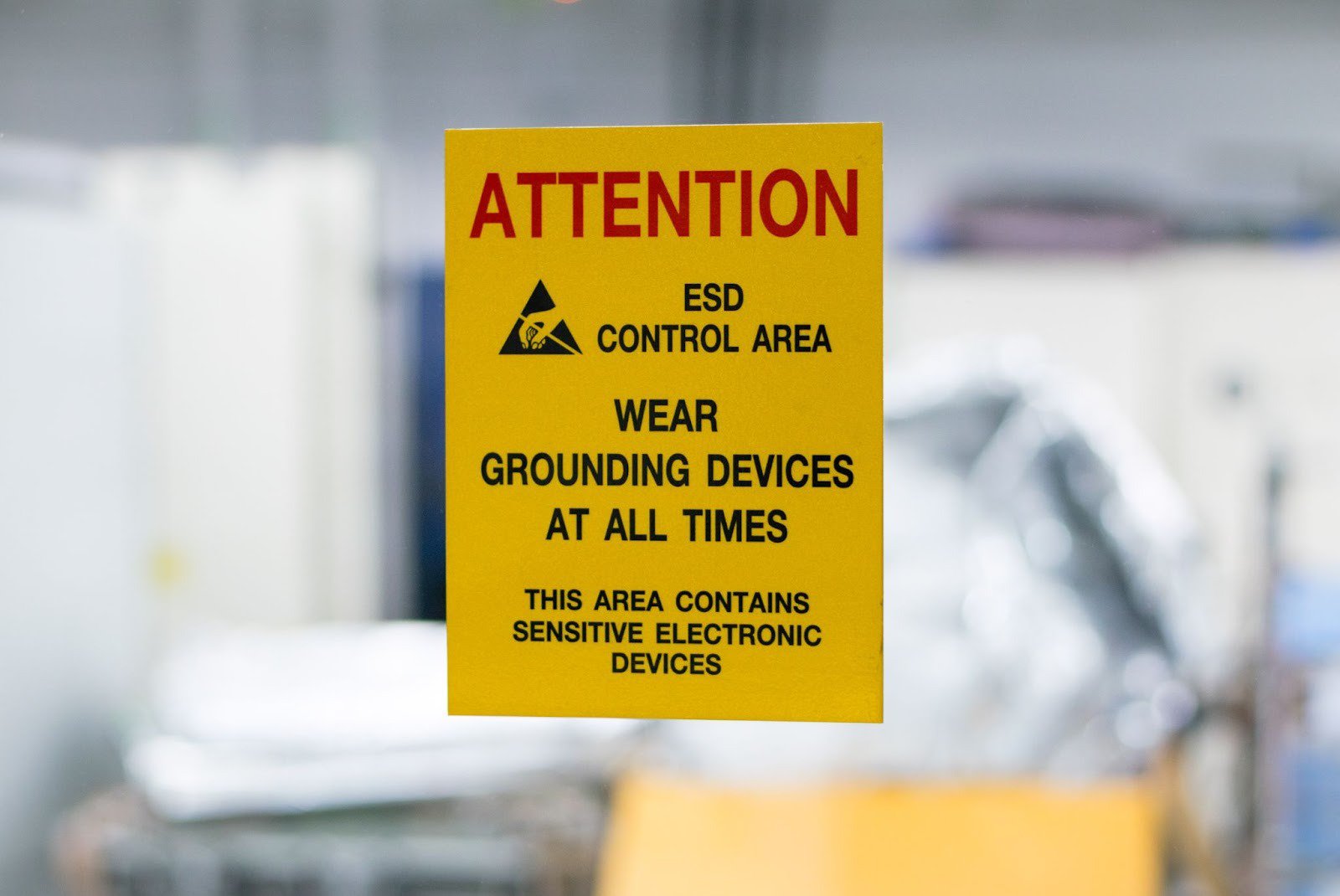
A single spark of static electricity, smaller than what you feel when touching a doorknob, can damage sensitive components. That’s why electronics logistics can’t be treated like generic “dry storage.” Many devices are susceptible to electrostatic discharge (ESD) at very low voltages (even below 100V), and humans often can’t feel a discharge until it’s far higher, which is how damage slips through without anyone noticing.
For brands managing an electronics supply chain, the 3PL decision is less about “do you have space” and more about “do you run technical safeguards every day.” Latent defects (parts that pass initial tests but fail later in the field) are the nightmare scenario because the cost shows up as warranty exposure, returns, and reputation risk.
Understanding ESD: More Than Antistatic Bags
ESD protection starts on the warehouse floor, because your handling environment can create or drain static with every touch. An ESD control program typically uses Electrostatic Protected Areas (EPAs) with grounded workstations, appropriate flooring/worksurfaces, and procedures that keep product, people, and equipment at the same electrical potential.
In practical electronics logistics, that means the safeguards are built into the workflow, not added “only when we remember”:
- Grounded receiving and inspection stations for any open handling
- Defined EPAs for repack, QA checks, and value-added work
- Documented packaging rules (when to use shielding bags, conductive totes, or closed containers)
- Training that treats ESD as a process requirement, not a preference
Climate Control and Moisture Sensitivity
Static and moisture pull the operation in opposite directions, so electronics storage needs balance, not extremes. Low humidity raises static risk; higher humidity reduces static but can increase corrosion or oxidation exposure for some materials, which is why many electronics programs aim for a controlled mid-range rather than swinging with the weather. NASA guidance commonly cited for ESD control recommends maintaining relative humidity in a moderate band (often around 40–60% RH).
Moisture sensitivity (MSL) is its own risk category: some devices absorb moisture and can be damaged during solder reflow, including the well-known “popcorn” failure mode. That’s why storage discipline (sealed packaging, dry storage rules where required, and exposure-time tracking) matters even before components ever reach the manufacturing line.
ISO 9001:2015 and the Process Backbone
Quality systems turn “best intentions” into repeatable execution, and that’s the point of ISO 9001:2015 in warehousing. ISO-driven operations document what should happen, record exceptions when reality differs, and use corrective actions so the same failure mode doesn’t keep resurfacing under peak pressure. For electronics supply chain teams, that discipline supports consistency across receiving, storage, handling, and outbound verification.
Lansdale Warehouse’s ISO 9001 certification pairs well with electronics handling because it supports auditable controls and traceability expectations, especially when customers need to prove chain-of-custody and tight process adherence.
The Digital Thread: Serial Number Traceability in Electronics Logistics
In electronics, “a pallet” is rarely the unit that matters; the serial number (or device ID) is. ISO 9001 includes requirements around identification and traceability where applicable, and many electronics programs implement unit-level tracking so receiving and outbound scans create a verifiable history for warranty claims, returns triage, and recalls.
This is where RF scanning and a WMS become non-negotiable:
- Serial capture at receiving: ties what arrived to who received it, when, and under which condition checks
- Location control: confirms exactly where each serialized unit sits (not just which aisle)
- Outbound verification: ensures the shipment contents match the order down to the individual unit

When the 3PL can also support EDI, that “digital thread” doesn’t live in a separate portal, it flows into the customer’s ERP so procurement, QA, and service teams see the same data in near real time.
High-Value Asset Security: Layered Controls and Chain of Custody
Electronics are a high-theft target, so electronics logistics needs layered security rather than a single guardrail. The basics are physical controls: restricted access areas (such as caged zones for high-value SKUs), 24/7 video monitoring, and access logs that show who entered, when, and why.
Asset-based transportation adds another practical safeguard: when the 3PL owns its fleet and controls dispatch, you reduce handoffs and keep the chain of custody tighter from dock to delivery. That matters when you’re moving high-value components on schedule windows where delays or reconsignment can increase risk.
What to Ask a 3PL: Electronics Logistics Readiness Checklist
The table below shows a fast way to qualify whether a provider is set up for electronics storage and handling, using questions that map directly to risk.
| Risk Area | What To Ask | What A Strong Answer Includes |
|---|---|---|
| ESD controls | Do you run defined EPAs? | Grounded stations, flooring/worksurfaces, training, documented handling rules |
| Humidity balance | How do you manage RH swings? | Monitored climate targets and response plan for seasonal changes |
| MSL handling | How do you manage moisture-sensitive devices? | Exposure-time rules, packaging discipline, dry storage where required |
| Traceability | Can you track by serial number? | RF/WMS unit-level capture and outbound verification |
| Security | How is high-value inventory protected? | Restricted zones, surveillance, access logs, controlled custody in transit |
Choose a Technical Partner, Not Just a Storage Vendor
Electronics require a 3PL that thinks like an engineer and operates like a quality organization. The right partner combines ESD-safe handling, climate discipline, ISO 9001 process control, RF-based traceability, and security practices that reduce both damage risk and custody risk across the electronics supply chain.
Is your current 3PL set up for the realities of electronics logistics: ESD controls, humidity management, serial traceability, and secure chain of custody? Talk with Lansdale Warehouse about specialized handling, ISO-certified process rigor, EDI connectivity, and asset-based execution.
Comments are closed