

Working with a major retailer is a significant opportunity and a significant obligation simultaneously. The volume justifies the partnership. The vendor compliance program enforces it. Retailers like Walmart, Target, Home Depot, and Amazon operate vendor programs that rely on standardization. These include specific label formats, barcode types, ASN requirements, and delivery window tolerances.
Fulfillment operations that can't meet those specifications generate chargebacks, probationary flags, and other error messages. Eventually, these unresolved warnings can lead to account terminations. Mastering fulfillment at the retail level means mastering compliance labeling first.
Fulfillment Compliance: What Retailers Actually Require
Major retailers define compliance requirements at the case level, the pallet level, and the shipment level.
- At the case level, the GS1-128 barcode must encode specific application identifiers: typically the GTIN, the batch or lot number, and a production or best-before date for perishable and regulated items.
- Meanwhile at the pallet level, the SSCC must match the ASN transmission exactly.
- Finally at the shipment level, the EDI 856 advance ship notice must arrive in the system before the freight does.
GS1 US reports that the retail industry faces over $36 billion in annual claims from carton pack and shipment inaccuracies. That figure reflects how systematically retailers enforce compliance. Because of this, high-volume fulfillment programs for major retailers require label generation integrated with the WMS, not handled as a post-pick manual step.
The Labeling Sequence That Prevents Order Failures
Compliance labeling failures almost always trace back to one of three sources. The wrong label lands on the right carton. The right label lands on the wrong carton. Or a correct label references data that changed after the purchase order was confirmed.
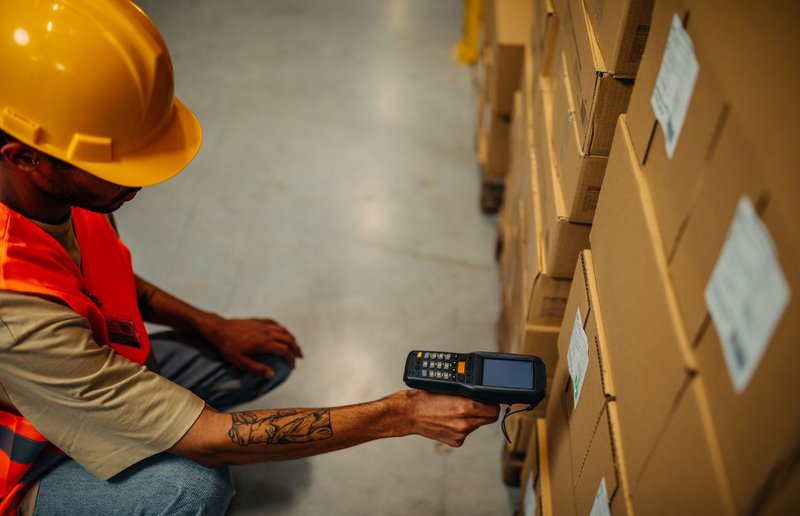
Lansdale Warehouse addresses all three through mobile barcode scanning that validates carton identity against the pick record before the label generates. RF-guided fulfillment matches each pick to the corresponding order line in real time. Lansdale runs the pick, pack, and ship flow as a single integrated sequence with validation checkpoints at each handoff, not three separate operations that share data only at the end.
For high-volume D2C and B2B fulfillment across both retail and eCommerce channels, that sequence runs simultaneously across pick locations. Label data comes from the same order record feeding both the physical label and the EDI 856.
EDI Keeps Fulfillment Compliance Synchronized
The label on a carton is the physical representation of the data in the EDI transaction. If the EDI 850 purchase order specifies one unit of measure and the fulfillment team picks to a different one, the label and the ASN carry the same error. When the retailer's receiving system checks the inbound shipment, the discrepancy generates a chargeback automatically.
EDI accuracy in inventory management is the upstream control that makes downstream label accuracy possible. When the purchase order data is clean, the WMS generates the correct label data without manual intervention. That automation makes compliance labeling scalable, because at major retailer volumes, manual verification isn't a realistic quality control mechanism. Meanwhile, X12 EDI standards govern the machine-to-machine data exchange that supports this process. As a result, billions of transactions flow through supply chain applications daily.
What ISO 9001 Adds to Fulfillment Operations
Compliance labeling at retailer scale requires more than the right equipment and a clean EDI configuration. It requires documented procedures, trained personnel, and audit mechanisms that create accountability when volume is high and the error margin is low.

ISO 9001 certification covers exactly that layer. Zero-error fulfillment at scale depends on process controls that documentation supports, staff follows consistently, and management reviews when an error occurs. The ISO framework gives retail vendors confidence that a Lansdale-managed fulfillment program doesn't rely on individual performance. It relies on documented process.
For logistics managers working with major retail partners who run quarterly audits and chargeback reconciliation programs, that documentation trail is the foundation of a defensible vendor compliance record. If your current fulfillment operation generates chargebacks or retailer compliance flags, contact us to talk through what a compliance-centered fulfillment program looks like in practice.
Comments are closed