
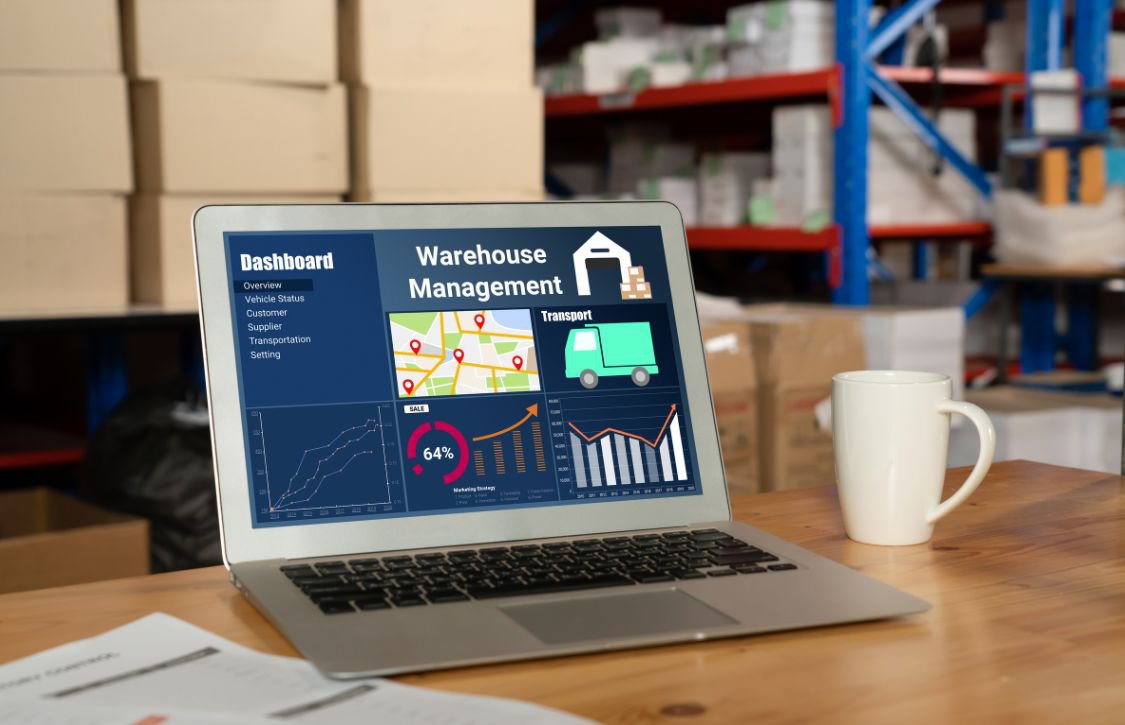
Picking operations consume roughly 50 to 60 percent of total warehouse labor cost. Most of this spend goes to worker travel time between pick faces, not actual item retrieval. For operations managers and warehouse directors at mid-market distributors, this ratio means the single largest line item in the labor budget isn't productive work. It's movement. Order picking software attacks this imbalance by optimizing routes, batching orders, and directing workers through the shortest paths across the floor.
As a result, companies spend fewer labor hours producing the same or higher throughput and converting wasted walking time into measurable picks per shift. Standard WMS platforms provide basic pick sequencing, but they lack the dynamic routing and wave intelligence needed to close the travel gap at scale.
How Order Picking Software Reduces Travel Time
Standard WMS picking logic routes workers through locations in a fixed sequence. This approach ignores real-time variables like aisle congestion, pick density shifts, and order clustering opportunities. Dedicated order picking software builds dynamic pick paths that adapt to current floor conditions.
Route optimization algorithms calculate the shortest traversal distance for each pick wave. MHI Solutions documents how non-productive travel and searching dominate picker labor hours in manual operations, and how goods-to-person automation can push productivity from 40-50 lines per hour to over 300. Even without full automation, intelligent batch picking groups three to six orders per trip and reduces picker travel by 15 to 25 percent. Combined with slotting optimization, these gains compound across every shift.

Facilities already using RF scanning for pick validation can deploy route optimization as an add-on without replacing the existing WMS. Integration typically runs through API connections. Optimized pick sequences push directly to handheld devices on the floor.
Batching and Wave Planning Through Order Picking
Single-order picking sends one worker to fulfill one order at a time. This method maximizes accuracy, but wastes travel by sending pickers down the same aisles repeatedly. Order picking software solves this with batch and wave planning capabilities.
Batch picking groups multiple orders with overlapping SKU requirements into a single trip. The software identifies which orders share pick locations and clusters them. Wave planning adds a time dimension by releasing batches at intervals that match packing station capacity.
Operations running pick-and-pack workflows gain the most from this sequencing. Pickers don't flood the packing area with more volume than it can process. The software staggers waves to maintain a steady flow from pick face to ship dock.
Zone picking adds another optimization layer for larger facilities. Each picker works a defined area, and orders pass from zone to zone until complete. This approach reduces aisle congestion and keeps travel distances short within each section. Order picking software coordinates the handoffs between zones automatically, so no single picker carries an order across the entire facility.
Measuring the Labor Return on Investment
Forecasting engines within picking software predict workload by analyzing historical patterns, seasonal trends, and promotional schedules. This predictive capability lets managers align staffing levels with actual demand rather than static headcount models. WERC's annual DC Measures benchmarking study confirms that operations using formal measurement programs achieve 15 to 25 percent higher labor productivity than those without structured tracking.

Lines-per-hour is the primary productivity metric. Order picking software tracks this in real time and benchmarks individual picker performance against facility averages. When a picker consistently falls below the benchmark, supervisors can address training needs or equipment issues before the gap compounds across a full shift.
For facilities processing high daily pick volumes, even modest gains in lines-per-hour translate into significant FTE reductions per shift. The labor savings often exceed annual software licensing cost within the first year of deployment. This math converts picking from a pure labor expense into a measurable productivity contributor that operations and finance teams can track together.
Connecting Order Picking Software to Warehouse-Level Accuracy
Slotting decisions determine where products sit on the shelf. Inventory accuracy determines whether pickers find the right item at the expected location. Mispick elimination strategies rely on accurate slot data feeding into the picking software.
Order picking software, slotting analysis, and inventory verification should share the same data layer. When they do, the warehouse floor operates as one integrated system. Pick errors drop because the software routes workers to verified locations. Travel time drops because high-demand items sit in optimal positions. Labor spend drops because fewer hours produce higher throughput.
The right software layer converts every walk down the aisle into a data-driven, optimized transaction. Contact us to learn how picking optimization fits into your warehouse operation.
Comments are closed