
Speed, visibility, and cost control often come down to one decision: where you stage inventory. Megalopolis logistics focuses on placing products close to dense demand, major gateways, and multi-modal networks so supply chain teams can respond faster without overpaying for urgency.
That approach matters more than ever because logistics is a large, measurable cost center. The CSCMP State of Logistics reports U.S. business logistics costs at $2.3 trillion, equal to 8.7% of GDP, which shows how quickly network inefficiency turns into real dollars. In the Northeast, that reality meets extreme customer expectations, tight delivery windows, and frequent congestion. The right hub strategy helps you protect service while stabilizing spend.
Megalopolis Logistics and the New East Coast Service Baseline
The Northeast corridor, often called the Northeast megalopolis or BosWash, concentrates population, purchasing power, and critical infrastructure in a relatively compact footprint. Estimates commonly place the core megaregion at just over 53 million residents. For supply chain leaders, that density creates a new baseline: customers expect short lead times, accurate ETAs, and quick exception resolution.
A hub placed in the middle of that corridor can support:
- Shorter final-mile transit to major metro areas
- Later order cutoffs without sacrificing on-time delivery
- Fewer split shipments because inventory sits closer to demand
- More predictable staffing when outbound waves align with nearby customers
Business impact: a central staging point reduces service variability, limits premium freight, and strengthens customer experience consistency across retail, B2B replenishment, and eCommerce channels.
Port Proximity Turns Inbound Uncertainty Into Predictable Flow
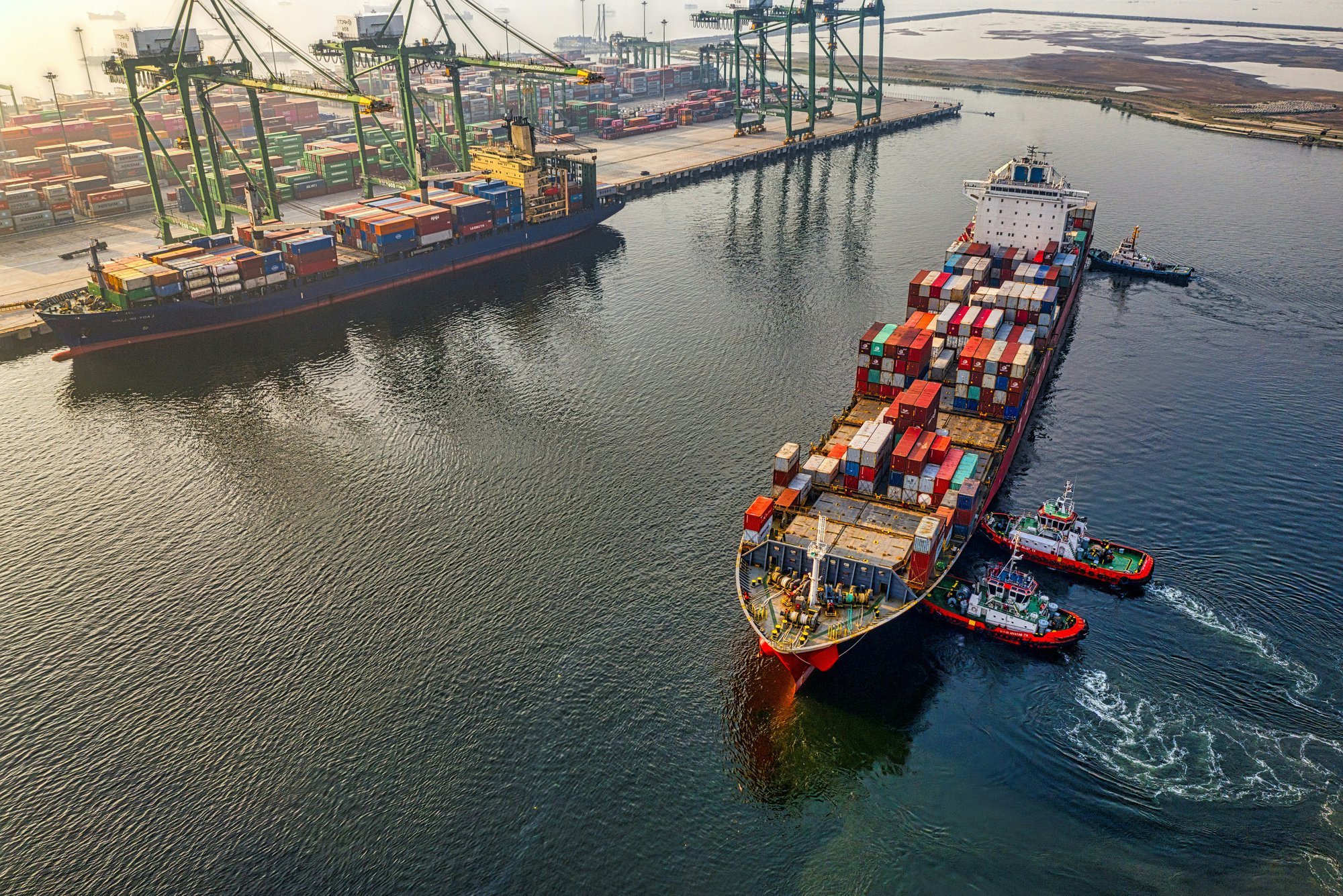
East Coast gateways play a major role in import strategies, especially for brands serving the Northeast and Mid-Atlantic. When your facility sits close to major ports, inbound containers reach storage faster, and teams can convert arrivals into available inventory with fewer days of dwell time.
Port-adjacent hubbing supports three high-value outcomes:
- Lower disruption exposure: fewer handoffs reduce the chances of missed appointments, chassis delays, or storage surprises
- Faster inventory availability: quicker dray moves shorten the time from discharge to putaway
- Improved working capital control: faster turns reduce the need for oversized buffers
The effect becomes clearer as eCommerce continues to drive speed expectations. The U.S. Census Bureau reports that third-quarter 2025 e-commerce sales accounted for 16.4% of total sales. That share reinforces a reality many operators feel daily: customers want rapid delivery and frequent tracking updates, which makes inbound reliability a direct revenue issue.
Business impact: closer inbound positioning reduces lead time uncertainty and helps planners keep safety stock disciplined instead of inflated.
Rail and Truck Coordination Creates a Stronger Inland Network
A port-centric plan works best when you can move freight inland efficiently after it lands. That is where rail-served sites and coordinated dray plus over-the-road execution create leverage. Rail can provide strong efficiency for the right lanes, and it can also help diversify risk when highway capacity tightens.
Industry data highlights why many shippers include rail in their modal mix. The Association of American Railroads notes freight rail moves one ton of freight nearly 500 miles per gallon of fuel, on average. That efficiency can translate into cost advantages and improved sustainability metrics, particularly for longer moves where schedule planning aligns with rail service patterns.
A high-performing hub strategy typically uses:
- Rail for predictable linehaul where volume and cadence fit
- Truck for time-sensitive moves and flexible final distribution
- Transloading options to shift between containers and domestic equipment when needed
- Cross-dock programs when inbound timing matches outbound demand.

Business impact: a blended modal approach reduces single-mode dependency, supports steadier budgets, and helps protect service levels during congestion or capacity swings.
Designing the Hub Playbook: Visibility, Compliance, and Throughput
A location alone does not create advantage. Execution creates advantage. The best hubs operate with tight process control, strong systems connectivity, and a throughput design that keeps freight moving without sacrificing accuracy.
A practical hub playbook usually includes:
- Real-time inventory access through a WMS and customer portals
- EDI connectivity to reduce manual data handling and speed confirmations
- Defined exception workflows for damages, holds, shortages, and appointment issues
- Compliance labeling and documentation controls aligned to customer rules
- Pick-pack and value-added lanes that scale with channel growth
- Cycle counting routines that protect inventory integrity as SKUs expand
This is also where a Mid-Atlantic, port-near footprint can shine. A hub positioned in the center of the Northeast corridor can reach multiple metro markets quickly, while still providing access to major gateways and multi-modal options. For many shippers, that means fewer “either or” tradeoffs between speed and cost.
Business impact: strong operating design improves order accuracy, reduces chargebacks, and shortens the time it takes to resolve service exceptions.
Put Megalopolis Hubbing to Work With Lansdale Warehouse
Strategic hubbing becomes easier when your logistics partner combines infrastructure, connectivity, and disciplined operating standards. Lansdale Warehouse brings a Customer Driven Logistics approach to the Mid-Atlantic, supporting programs that require both speed and precision near major East Coast gateways.
Lansdale offers online access to inventory and orders, EDI connectivity, and operational capabilities that support high-throughput networks, including pick-pack fulfillment, compliance labeling, cross-dock, rail service, rail transloading, and just-in-time support. Lansdale’s credibility also matters for regulated and food-grade programs, with ISO9001 certification and FDA and AIB-certified locations that reinforce quality management expectations.
If your organization wants to reduce inbound uncertainty, shorten lead times to dense Northeast demand, and improve supply chain visibility through a more intentional hub strategy, contact us to discuss how Lansdale can support your megalopolis logistics plan.
Comments are closed