

Pharmaceutical logistics does not forgive loose documentation. A missing chain of custody, an unscanned pallet move, a temperature excursion with no timestamp: each one is a compliance failure. For supply chain managers responsible for pharmaceutical products, end-to-end traceability is not a best practice. It is the foundation every other quality control measure depends on.
Building Traceability Into Every Touch Point
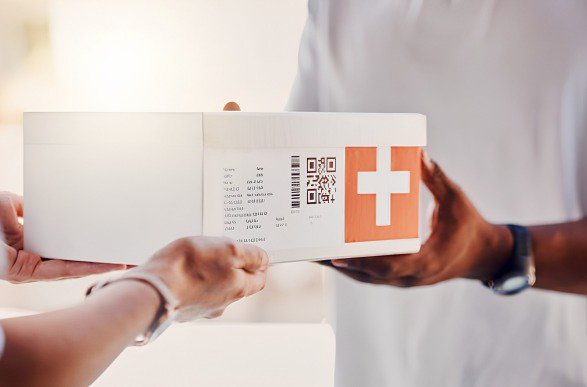
Traceability starts at inbound receipt. It does not stop until the product reaches its destination. At Lansdale Warehouse Company (LWC), Radio Frequency (RF) barcode scanning runs at every major touch point. That includes receiving, put-away, picking, and shipping. Every scan creates a timestamped record. So when a regulatory audit or a customer dispute requires documentation, that record is there and retrievable.
This matters because pharmaceutical products often carry lot-code, expiry, and serialization requirements. Generic warehousing cannot manage those by default. LWC's system enforces First In, First Out (FIFO) rotation where required. It validates lot attributes at receiving before inventory becomes available. It also confirms picks against the order, the label, and any compliance requirements before product leaves the dock. That is a system-enforced process. Human error has fewer places to enter.
For a deeper look at how RF discipline supports inventory accuracy in specialized warehousing, the same principles that apply to pharmaceutical handling apply across every regulated commodity LWC manages.
Why Certification Signals More Than Compliance
Traceability tools only work inside a quality management framework that holds them accountable. That is why LWC's ISO 9001 certification matters to pharmaceutical customers. ISO 9001 is not a pharmaceutical-specific standard. But it governs the quality management processes that pharmaceutical logistics depends on. Those include documented procedures, defined responsibilities, corrective action protocols, and continuous improvement cycles. So for a Director of Logistics evaluating a third-party logistics (3PL) partner, ISO 9001 signals that those processes exist and face external audit.
LWC also holds Food and Drug Administration (FDA) certification at select facilities. That confirms the storage and handling environment meets food-grade standards. For pharmaceutical products requiring controlled environments and contamination controls, FDA certification provides assurance beyond a verbal commitment. LWC's American Institute of Baking (AIB) certification adds another layer of audit discipline. Together, ISO 9001, FDA, and AIB form a compliance framework that regulated-industry customers can point to with confidence.
EDI and Real-Time Visibility as Pharmaceutical Traceability Tools
End-to-end traceability also requires data to move cleanly beyond the warehouse walls. Electronic Data Interchange (EDI) is what makes that possible at scale. LWC supports EDI X12 4010 transactions. It communicates via Value Added Network (VAN), AS2, and direct File Transfer Protocol (FTP) or Secure File Transfer Protocol (SFTP). For pharmaceutical customers managing serialization data or lot-level reporting, that connectivity means traceability data flows into the customer's Enterprise Resource Planning (ERP) system directly. In other words, no manual re-entry needed.
LWC also provides all customers with online, real-time access to inventory. For a pharmaceutical supply chain manager, that means lot counts, expiry dates, and order status are visible at any point in the distribution cycle. In particular, the Healthcare Distribution Alliance (HDA) identifies supply chain visibility and traceability as top priorities for distributors managing Drug Supply Chain Security Act (DSCSA) compliance.
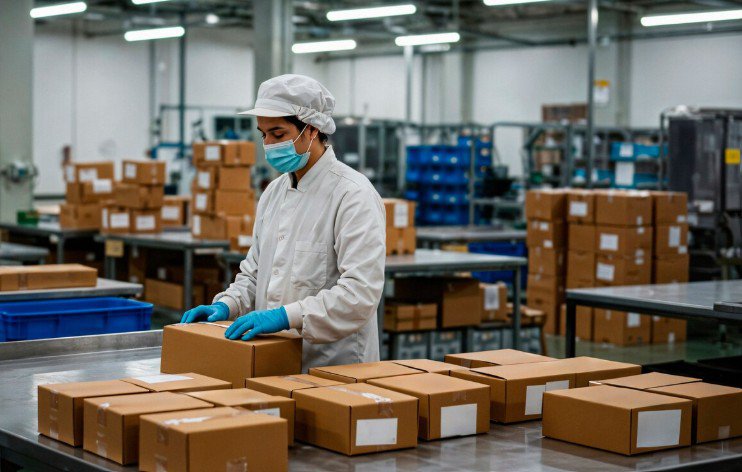
Remember, real-time data access is not a reporting convenience. It is a compliance requirement for many pharmaceutical programs. For more on how EDI supports 3PL partner integration, LWC applies the same standard to pharmaceutical customers as to every trading partner it supports.
Positioned to Support Pharmaceutical Distribution in the Northeast
LWC operates more than 500,000 square feet across five facilities in Montgomery County, Pennsylvania. All five sit within 100 miles of three major East Coast ports. Two connect directly to CSX Class I rail. Daily last-mile service runs via a short line railroad. All of that places LWC inside the Megalopolis corridor of roughly 90 million consumers. For pharmaceutical brands in the Northeast and Mid-Atlantic, that location supports tight replenishment cycles and cuts transit time between port receipt and regional distribution.
For a full breakdown of how that geographic position reduces lead time pressure, the Megalopolis edge for supply chain efficiency covers the practical impact on distribution planning across product categories.
Traceability, certification, EDI connectivity, and strategic location: these are four requirements pharmaceutical supply chain managers cannot compromise on. LWC meets all four. As one of the longest-operating 3PLs in the Mid-Atlantic region, LWC's Customer Driven Logistics philosophy means the customer's requirements define how the warehouse runs.
Are you ready to build traceability and compliance into your pharmaceutical supply chain? Contact Lansdale Warehouse to discuss what end-to-end visibility looks like for your operation.
Comments are closed