
Most inventory management failures do not start with bad data. They start with disconnected systems. When inbound scanning, storage tracking, cycle counting, and EDI each operate in isolation, errors compound at every hand-off. And by the time a discrepancy surfaces, it is already a customer problem.
For logistics managers handling complex, mixed product lines (pharmaceuticals, electronics, paper, consumer goods), that is not an acceptable risk. The fix is a connected tech stack where every touch point talks to the next, from inbound receipt through outbound fulfillment. When those systems work together, accuracy stops being a goal and starts being a result.
How RF Technology Powers Inventory Management
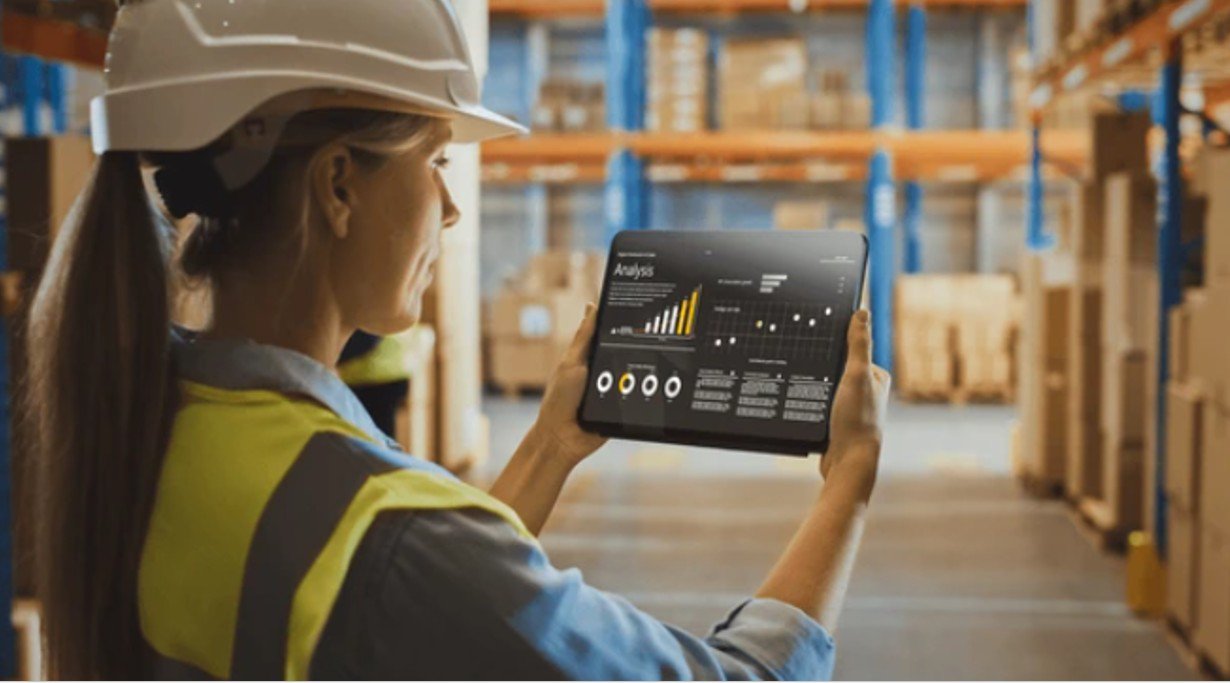
RF inventory control systems are the backbone of accurate warehousing at Lansdale Warehouse Company (LWC). Mobile barcode scanners check inbound inventory at receipt. They also confirm order accuracy before product leaves the dock. Every scan creates a data record. Those records then feed the real-time inventory portal that customers can access any time, day or night. For a deeper look at how LWC applies RF technology on the floor, the benefits of RF in warehousing covers how that system works in practice.
So when a Director of Operations needs a SKU count at 9 p.m. on a Friday, that answer is already there. No phone call needed. That kind of visibility is not a convenience. It is a basic requirement. The Warehousing Education and Research Council (WERC) consistently identifies inventory accuracy as a top operational priority for distribution managers across industries.

RF scanning also supports cycle counting. Cycle counts audit inventory in rotating segments, so operations never fully stop for a physical count. Because of that structure, discrepancies do not pile up between annual counts. And when variances do appear, teams have the data they need to find the root cause fast, before it becomes a customer-facing problem.
Specialized Equipment, Traceable Records
Not every product moves the same way. LWC runs specialized handling equipment built for the load profiles of the industries it serves. Roll paper handling, carton clamps, and slip sheet operations each work differently. Yet all of them pair with RF-enabled systems, so every movement leaves a traceable record that supports downstream reporting and compliance. For more on how specialized handling supports inventory accuracy across complex product categories, LWC's approach applies the same RF discipline to each material type it handles.
That traceability matters most where compliance is a hard requirement. For pharma customers, documented product movement supports the audit trails regulators expect. For food and beverage customers, it connects directly to the quality standards behind LWC's American Institute of Baking (AIB) and Food and Drug Administration (FDA) certifications.
In addition, ISO 9001 certification ties the quality management framework together across all five facilities. Together, these credentials confirm that LWC's inventory practices meet the bar that regulated industries set.
EDI: The Connective Tissue of Inventory Management
Accurate floor data only delivers full value when it flows cleanly to trading partners. Electronic Data Interchange (EDI) is what makes that possible at scale. LWC supports EDI X12 4010 transactions, including the 210 transaction set. It communicates via Value Added Network (VAN), AS2, and direct File Transfer Protocol (FTP) or Secure File Transfer Protocol (SFTP). For customers on custom flat file formats, LWC also handles CSV and similar setups without issue.
For supply chain managers vetting a third-party logistics (3PL) partner, EDI is not optional. It is the pipe that moves inventory data cleanly between a warehouse management system, the customer's Enterprise Resource Planning (ERP) platform, and downstream partners. Without it, teams fall back on manual entry. Errors multiply. And the real-time visibility that modern supply chains require simply disappears.

The smaller 3PL advantage often comes down to exactly this: a mid-sized partner with full EDI capability and the flexibility to match customer-specific file formats, without the rigid onboarding of a global network.
Positioned Where Your Customers Are
LWC runs more than 500,000 square feet across five facilities in Montgomery County, Pennsylvania. Two connect directly to CSX rail. All five sit within 100 miles of three major East Coast ports, inside the Megalopolis corridor of roughly 90 million consumers. For brands shipping across the Northeast and Mid-Atlantic, that location cuts lead times and lowers transportation costs. In many cases, those savings offset the cost of outsourcing warehousing altogether. For a full breakdown of how that geographic position supports supply chain efficiency across the Megalopolis, the case goes well beyond proximity to ports.
This mix of asset-based infrastructure, RF systems, EDI connectivity, and certified facilities is not accidental. It reflects the Customer Driven Logistics philosophy that has guided LWC since 1958. The customer's needs define how the warehouse runs. Not the other way around.
Ready to raise your inventory management standards? Contact Lansdale Warehouse and find out what a technology-forward 3PL looks like for your operation.
Comments are closed